My attorney, Helen Ward, arrived before Deputy Mills finished photographing the deed.
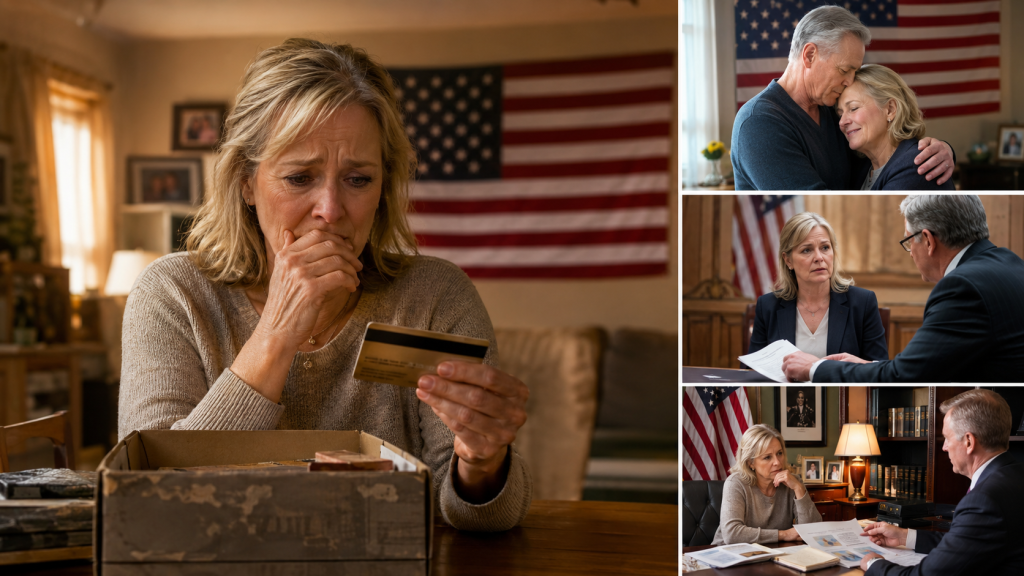
She stepped out of her sedan carrying a leather folder, walked past Ron and Linda without acknowledging them, and held out her hand.
“Let me see it.”
Deputy Mills passed her the folded document.
Helen read the first page.
Then the second.
Her expression changed.
Not dramatically.
Helen had represented me for almost twenty years, and one reason I trusted her was that she never wasted emotion when facts would do the job better.
But I saw her jaw tighten.
“This isn’t just forged,” she said.
Ron shifted his weight.
Linda stared at the ground.
I asked, “What do you mean?”
Helen pointed to the recording stamp in the upper corner.
“Someone filed this with the county.”
For a second, nobody spoke.
Even the wind seemed to disappear.
The U-Haul sat behind us with its rear door open, revealing a dining table, mattresses, plastic storage bins, and one of those oversized television boxes.
Ron’s retirement.
Linda’s kitchen.
Their future.
All of it packed into a truck and delivered to a house they had apparently believed was already theirs.
Deputy Mills looked at Ron.
“Who gave you this document?”
Ron’s confidence had disappeared.
“My son.”
“Derek Mercer?”
“Yes.”
“When?”
“Last weekend.”
“And what exactly did he tell you?”
Ron rubbed the back of his neck.
“He said Tom had already transferred the cabin to him and Claire.”
I corrected him.
“I did no such thing.”
Ron snapped, “That’s what he told us.”
Helen looked toward the cabin.
“Tom, we need to verify the county records immediately.”
She pulled out her phone.
I called my daughter.
Claire didn’t answer.
I called again.
Straight to voicemail.
The third time, she picked up.
“Dad?”
Her voice was shaking.
“Where’s Derek?”
A long silence.
“At work.”
“Are you sure?”
Another pause.
“No.”
Helen looked at me and mouthed, Put it on speaker.
I did.
“Claire,” I said, “your in-laws are standing in Margaret’s cabin right now with a moving truck.”
“What?”
“Derek gave them the door code.”
She started breathing quickly.
“No. Dad, listen—”
“And they have a deed.”
Silence.
“A deed with my signature on it.”
Still nothing.
“And your mother’s signature.”
Claire began crying.
That told me everything I needed to know about whether she had seen the document before.
“Dad, I can explain.”
“Then explain.”
“I didn’t know he was going to do this.”
“Do what?”
“I signed some things.”
Helen stepped closer.
“What things, Claire?”
Claire recognized her voice immediately.
“Helen?”
“Yes.”
“I thought they were estate documents.”
“What kind?”
“I don’t know.”
Helen closed her eyes briefly.
“You signed documents without reading them?”
“Derek said they were planning documents. He said Dad wanted everything organized so there wouldn’t be probate complications later.”
I felt something colder than anger settle into my chest.
“Helen handles my estate planning.”
“I know that now.”
“Claire, you knew that then.”
She started crying harder.
“I wasn’t thinking.”
Helen asked, “Did Derek ever have access to your father’s trust papers?”
Claire hesitated.
Then she said the sentence that changed the entire day.
“He helped Dad scan his tax documents last year.”
I remembered immediately.
Derek had offered.
I had been reorganizing the study after a plumbing leak damaged some shelving.
He spent nearly six hours scanning old financial statements, insurance documents, trust amendments, property records, and tax returns.
I had thanked him.
Bought him dinner.
Called him a good son-in-law.
Now I remembered leaving the room twice.
Once to pick up sandwiches.
Once to take a call on the porch.
Maybe forty minutes total.
Forty minutes was apparently enough.
Helen was already dialing the Iredell County Register of Deeds.
She gave my name.
Then the trust name.
Then the parcel number.
We waited.
Ron stared at the gravel.
Linda had started crying quietly.
Deputy Mills stood near the porch writing notes.
Finally Helen said, “Yes. Please check any instrument recorded within the last twelve months involving that trust.”
She listened.
Her face hardened.
“When?”
Another pause.
“How many?”
She turned away from us.
I felt the first real fear of the morning.
Not fear for the cabin.
Fear that the cabin was only where I happened to discover the problem.
Helen thanked the person on the other end and hung up.
“What?” I asked.
She looked at me.
“The cabin isn’t the only property involved.”
Ron slowly sat on the porch step.
Helen continued.
“There are three more deeds.”
I stared at her.
“What properties?”
“Your Charlotte rental.”
My stomach dropped.
“The commercial unit on Wilkinson Boulevard.”
That property generated nearly forty thousand dollars a year.
“And the twenty-two acres outside Mooresville.”
I couldn’t speak.
Margaret and I had purchased that land thirty years earlier.
We once planned to build our retirement home there.
Then she fell in love with the cabin.
The land stayed empty.
Over the years, development moved closer.
Last summer, a broker told me the property might be worth more than two million dollars.
Helen looked at me carefully.
“All three deeds were supposedly signed by you.”
“Margaret too?”
“On two of them.”
I laughed.
Not because anything was funny.
It was simply the only sound my body could produce.
“My dead wife has become very active in real estate.”
Deputy Mills stopped writing.
“Helen, do these documents appear fraudulent?”
“They appear impossible.”
Ron looked up.
“I didn’t know.”
I turned toward him.
“You unloaded a moving truck into my house.”
“Because Derek said—”
“You changed nothing in your head when a man who doesn’t own the property told you to move into it?”
“He said Claire owned it.”
“Claire doesn’t.”
Ron stood.
“You think I knew this was fake?”
“I don’t know what you knew.”
That was the truth.
And suddenly I realized I didn’t know what anyone knew.
Not Ron.
Not Linda.
Not Claire.
And certainly not Derek.
Deputy Mills told Ron and Linda they could remove their personal belongings but could not remain on the property.
“You’ll need to return everything to the truck.”
Ron pointed at the cabin.
“Today?”
Deputy Mills gave him a look.
“Immediately.”
Linda whispered, “Ron.”
He looked ready to argue.
Then he looked at Helen.
Then at the deed.
Then at the patrol vehicle.
He opened the U-Haul and started loading.
I went inside.
The first thing I noticed was Margaret’s mug.
It was on the counter.
Moved three feet from where I had left it.
Someone had placed a stack of paper plates beside it.
I picked it up.
There was a tiny chip near the handle that had been there since 2008.
Margaret used to call it her lucky mug because she claimed every time she drank from it before fishing, she caught something.
She rarely did.
But she kept saying it.
I stood there holding that ridiculous yellow mug while furniture scraped across the porch outside.
For three years, I had thought grief was the worst feeling a house could contain.
I was wrong.
Violation was different.
Grief left memories untouched.
Violation rearranged them.
Helen entered quietly.
“You okay?”
“No.”
She nodded.
“Good answer.”
I set down the mug.
“What happens now?”
“We verify every filing.”
“And then?”
“If the signatures are forged, we notify law enforcement and the register of deeds formally. We freeze whatever can be frozen. We’ll also check for liens, loans, attempted sales, or transfers involving the properties.”
“Can Derek sell them?”
“Not legally.”
“That wasn’t my question.”
She looked at me.
“No.”
Then, after a beat:
“But fraudulent documents can create very real problems before they’re unwound.”
I leaned against the counter.
“How bad?”
“We need to find out.”
My phone buzzed.
Claire.
I almost ignored it.
Then I answered.
“Dad, please come home.”
“Where’s Derek?”
“I don’t know.”
“You live with him.”
“He left early this morning.”
“Where did he say he was going?”
“Raleigh.”
“For what?”
“Meeting.”
“What kind?”
“I don’t know.”
I looked at Helen.
She was already taking notes.
“When did you last see him?”
“Six this morning.”
“Did he take luggage?”
Silence.
“Claire.”
“Yes.”
My hand tightened around the phone.
“How much?”
“A suitcase.”
“What kind of suitcase?”
“The black one.”
“The big one?”
“Yes.”
“Did he say why?”
“He said the meeting might run late.”
A laugh escaped me again.
“He took a week-sized suitcase to an overnight business meeting?”
“Dad, I didn’t think—”
“That seems to be becoming a theme.”
Helen touched my arm.
Not to stop me.
Just enough to remind me that Claire was still my daughter.
I lowered my voice.
“Did he ask you to sign anything else?”
“No.”
“Think carefully.”
“I am.”
“Bank documents?”
“No.”
“Trust documents?”
“No.”
“Power of attorney?”
Claire stopped breathing for a second.
I heard it.
“What?”
“A form.”
“What form?”
“He said it was temporary.”
Helen grabbed my wrist.
“What did you sign, Claire?”
“I don’t know.”
“When?”
“Two weeks ago.”
“What was the title?”
“I don’t remember.”
“Did it have the words power of attorney?”
Another silence.
“I think so.”
Helen’s face turned pale.
“Claire, listen to me. Do not sign anything else. Do not access joint financial accounts until I tell you what to check. Do not contact Derek and warn him we know about the deeds.”
“But he’s my husband.”
Helen’s voice remained calm.
“And we have documentary evidence suggesting someone forged your deceased mother’s signature on multiple property transfers. Your loyalty right now needs to be to the truth.”
Claire began crying again.
I closed my eyes.
Three years earlier, I had stood beside her at Margaret’s funeral.
Claire had clung to my arm so hard her fingernails left marks.
Derek had been there too.
He handled the catering.
Helped with the guests.
Drove Claire home when she couldn’t stop crying.
I had told Margaret’s sister that at least Claire had married a dependable man.
I wondered how many times in life we mistakenly call someone trustworthy simply because we haven’t caught them yet.
Deputy Mills entered.
“Mr. Hale?”
I ended the call.
“Yes?”
“You should probably see this.”
He walked me outside.
Ron had removed most of the boxes.
One remained near the porch.
It had split open.
Inside were several framed photographs.
Family photographs.
One showed Ron and Linda at Christmas.
Another showed Derek and Claire.
The third stopped me.
It was a printed architectural rendering of the cabin.
Except the cabin looked completely different.
The porch had been enclosed.
The exterior painted white.
A large deck extended toward the lake.
And across the bottom were the words:
MERCER LAKE HOUSE RENOVATION — PHASE ONE.
I picked it up.
“Ron?”
He froze.
“What is this?”
He walked over slowly.
“Derek had plans drawn.”
“For my house.”
“He said it was theirs.”
“When?”
“February.”
February.
Seven months earlier.
“Did he tell you I approved it?”
Ron shook his head.
“He said you were stepping away from managing your properties.”
“What else did he tell you?”
Ron looked toward Linda.
She stared at him.
“Tell him.”
“Linda—”
“Tell him everything.”
He exhaled.
“He said you were having memory problems.”
Helen went completely still.
I stared at Ron.
“What?”
“He said Claire was worried about you.”
“When did he say this?”
“Months ago.”
“What exactly did he say?”
Ron rubbed his forehead.
“That you were confused sometimes. Forgetting bills. Misplacing documents. That Claire was helping handle things.”
My anger became something sharper.
More focused.
Because suddenly several small events from the past year rearranged themselves.
Derek asking whether I had updated my medical power of attorney.
Derek joking at Thanksgiving that I had told the same story twice.
Derek asking Claire in front of everyone whether I should still be driving long distances.
Derek volunteering to organize my tax records.
None of it seemed important at the time.
Together, it looked like scaffolding.
A structure built slowly around a lie.
Helen asked, “Did Derek ever mention seeking guardianship?”
Ron looked uncomfortable.
“He said it might become necessary.”
The world narrowed.
My son-in-law hadn’t simply tried to steal property.
He had been preparing an explanation for how he obtained it.
I was old.
Confused.
Forgetful.
Generous.
Maybe incompetent.
Whatever story was required.
Deputy Mills asked Ron for Derek’s current phone number, employer, vehicle information, and any messages discussing the property.
Ron hesitated.
Then Linda walked to their SUV and returned with her phone.
“I have texts.”
Ron looked furious.
Linda ignored him.
She scrolled.
“Here.”
Deputy Mills read.
His eyebrows rose.
“Can you forward these to me?”
“Yes.”
Ron muttered, “Linda.”
She turned on him.
“He forged a dead woman’s name.”
“We don’t know that Derek did it.”
“Then let the police figure it out.”
For the first time that morning, I felt something almost like sympathy for her.
Almost.
By noon, the U-Haul was loaded again.
Deputy Mills watched Ron secure the door.
“You understand neither of you is permitted to enter the property without Mr. Hale’s permission?”
“Yes,” Linda said.
Ron said nothing.
“Mr. Mercer’s access code will be disabled,” I said.
Helen looked at the keypad.
“Actually, Tom, change the entire system.”
I did.
Before leaving, Ron approached me.
He looked older than he had two hours earlier.
“I truly thought Claire owned it.”
I said nothing.
“Derek showed me the deed.”
“My wife’s signature was on it.”
“I didn’t know when Margaret died.”
That was believable.
Ron and Linda had met Margaret only twice before her illness.
Still, I looked at the U-Haul.
“You planned to move into this house without calling me once.”
He had no answer.
Exactly.
They drove away.
Deputy Mills stayed another twenty minutes.
Before leaving, he said the fraudulent documents would likely involve detectives because of the number of properties and the potential financial value.
“Keep every message,” he said.
“I will.”
“And if Mr. Mercer contacts you, don’t threaten him.”
I almost smiled.
“Deputy, I’m seventy-one years old.”
“I’ve arrested older.”
That actually made Helen laugh.
When everyone left, I locked the cabin.
The repair could wait.
By two o’clock, Helen and I were headed back to Charlotte.
We stopped at her office before going anywhere else.
Her paralegal had already pulled copies of every deed.
Four properties.
Four transfers.
All recorded within five months.
The signatures were convincing.
Very convincing.
Mine looked almost perfect.
Margaret’s was good enough to fool anyone who had never known her.
But I knew something the forger didn’t.
Margaret signed formal documents using her full middle name.
Margaret Elise Hale.
The deeds showed Margaret E. Hale.
She used that abbreviated signature for Christmas cards.
Never legal papers.
Helen noticed it too.
“Someone copied the wrong source.”
Then her paralegal said, “There’s more.”
She placed another document on the desk.
A home-equity line secured against the Charlotte rental.
Balance:
$318,000.
I sat down.
“Who borrowed that?”
“The recorded lien references the deed transferring the property to Derek and Claire.”
Helen asked, “Where did the money go?”
“We’ll need subpoenas or Claire’s cooperation to trace it.”
My phone rang.
Claire again.
This time Helen told me to answer.
“Dad.”
“What did you find?”
“I checked our accounts.”
Her voice sounded hollow.
“What accounts?”
“The joint savings.”
“How much?”
“It’s almost empty.”
“How much was there?”
“About two hundred seventy thousand.”
“How much now?”
“Eleven thousand.”
Helen started writing.
“Anything else?”
Claire swallowed.
“The brokerage account is down too.”
“By how much?”
“I don’t know yet.”
“Claire.”
“Maybe four hundred thousand.”
For several seconds, I couldn’t hear anything except the faint air-conditioning vent above Helen’s desk.
Seven hundred thousand dollars.
Plus the loan.
Plus four fraudulent deeds.
And Derek was somewhere with a suitcase.
“Call your bank’s fraud department,” Helen said.
“I already did.”
“Good.”
“I also checked my credit.”
Helen looked up.
Claire continued.
“There’s a loan I didn’t recognize.”
“How much?”
“Ninety-five thousand.”
I whispered something Margaret would have scolded me for saying.
Helen didn’t react.
“Claire, do you know Derek’s current location?”
“No.”
“Does his phone share location with you?”
“It used to.”
“Check.”
A pause.
Then:
“It’s off.”
Of course it was.
That afternoon, Claire came to Helen’s office.
I barely recognized her.
Not physically.
Emotionally.
My daughter had always carried herself with confidence.
She was forty-two, a pediatric physical therapist, organized almost to a fault, the kind of woman who scheduled dentist appointments six months early.
Now she looked like a frightened teenager.
She sat across from me.
“I’m sorry.”
I didn’t answer.
“I should have read everything.”
“Yes.”
“I trusted him.”
“I trusted him too.”
That broke something in her.
She covered her face and sobbed.
I walked around the desk.
For a second I resisted.
Then I hugged my daughter.
Because anger can wait.
Some moments only happen once.
Helen gave us a minute.
Then she placed the documents in front of Claire.
“Did you sign these?”
Claire examined the first deed.
“Yes.”
The second.
“Yes.”
The third.
“I think so.”
The fourth.
“Yes.”
“Did you see your father sign?”
“No.”
“Did Derek tell you your father had signed?”
“Yes.”
“Did you see your mother’s signature?”
Claire looked confused.
“No.”
Helen turned one deed toward her.
Claire’s face drained completely.
“Oh my God.”
“That’s not the only one.”
Claire examined the others.
Then whispered, “He told me these were acknowledgments for transferring future interests.”
Helen asked, “Did he prepare the documents?”
“He said an estate lawyer did.”
“What lawyer?”
“I don’t know.”
“Did you meet this lawyer?”
“No.”
“Speak by phone?”
“No.”
“Email?”
“No.”
Helen nodded slowly.
“Then Derek may have needed your legitimate signature to make the fraudulent transfers appear more credible.”
Claire looked at me.
“Dad, I swear I thought—”
“I believe you.”
She blinked.
Maybe she expected me to blame her entirely.
I didn’t.
She had been careless.
Terribly careless.
But carelessness and conspiracy are not the same thing.
Helen asked about the power of attorney.
Claire found it in her email.
Derek had sent it as a PDF.
The document gave him broad authority over financial accounts, business interests, and real estate transactions.
It had been notarized.
Claire pointed at the notary’s name.
“I’ve never met that person.”
Helen smiled without humor.
“Interesting.”
The name was Patricia Wynn.
By five o’clock, Helen had discovered Patricia Wynn’s notary commission had expired eighteen months earlier.
And there was another problem.
Patricia Wynn had died eight months ago.
I stared at Helen.
“Does Derek have a collection of dead people somewhere?”
“Apparently they’re very cooperative.”
Claire actually laughed.
Only for half a second.
Then she cried again.
The next morning, detectives contacted us.
The case moved quickly after that.
Not television quickly.
Real-life quickly, which still meant phone calls, paperwork, interviews, subpoenas, signatures, waiting rooms, and repeated explanations.
But the evidence piled up.
Derek had not gone to Raleigh.
Traffic cameras showed his SUV heading south on Interstate 77.
His company told police he had taken personal leave.
His work laptop had been wiped.
His personal phone stopped communicating with cellular towers before noon.
Then police discovered his SUV abandoned in a long-term parking garage near Charlotte Douglas International Airport.
That sounded bad.
Very bad.
But Helen remained calm.
“Airports have cameras.”
They did.
Derek had entered the terminal carrying the black suitcase.
But he never boarded a flight.
Instead, footage showed him leaving through another exit ninety minutes later wearing a baseball cap and carrying only a backpack.
The suitcase went into a storage locker.
Police opened it with a warrant.
Inside were clothes.
Nothing useful.
A decoy.
He had known enough to create a false trail.
That frightened Claire more than anything.
“This wasn’t panic,” she said.
“No,” I replied.
“He planned it.”
“Yes.”
The financial trail told the rest.
Over fourteen months, Derek had created three shell companies.
One had received money from the home-equity line.
Another had purchased cryptocurrency.
The third had supposedly provided consulting services to a business partially owned by one of Derek’s old college friends.
Helen explained it simply.
“He’s been moving money in circles.”
“Why?”
“To make it harder to follow.”
“Did he succeed?”
“For a while.”
The detectives uncovered emails.
Some were worse than the theft.
In one message to a financial adviser, Derek wrote:
Tom Hale is beginning to decline cognitively, and Claire will probably need to assume control soon.
In another:
Once the trust properties are consolidated, we can liquidate nonessential assets.
Nonessential assets.
That was how he described the cabin Margaret and I built with our own hands.
I remembered hauling lumber in 1994.
Margaret painting the bathroom because we couldn’t afford a contractor.
Claire sleeping in a tent in the living room because we hadn’t installed the bedrooms yet.
Nonessential.
I printed that email.
Not because I needed evidence.
Because I needed to remember exactly who Derek had become.
A week after the cabin discovery, Ron called.
I considered ignoring him.
Instead, I answered.
“Tom.”
“Yes.”
“I found something.”
“What?”
“Derek kept some boxes in our garage.”
“What kind of boxes?”
“Files.”
I sat straighter.
“Have you touched them?”
“No.”
“Don’t.”
“Linda already called the detective.”
Good.
For once, Ron had listened.
Inside those boxes, investigators found copies of my trust documents.
Old tax returns.
Bank statements.
Signature samples.
A photocopy of Margaret’s driver’s license.
And handwritten notes.
One page listed approximate property values.
CABIN — 1.3M
RENTAL — 780K
COMMERCIAL — 940K
LAND — 2.1M
TOTAL — 5.12M
Below that:
CLAIRE FUTURE BENEFICIARY
TOM = OBSTACLE
I stared at the photograph of the page for a long time.
Obstacle.
After everything Derek had received from our family.
Christmases.
Vacations.
Loans.
A down payment on their first home.
Help when his business venture failed.
Margaret treating him like a son.
Me treating him like one after she died.
Obstacle.
Helen asked whether I wanted a break.
“No.”
Another page showed something even more disturbing.
A list titled CAPACITY.
Under it:
Repeated stories
Driving concern
Missed appointments
Medication confusion
Memory statements from family
Doctor evaluation?
It was a blueprint.
He had been trying to manufacture evidence that I was incompetent.
Claire read it and turned white.
“He asked me whether you forgot Mom’s anniversary.”
I remembered that conversation.
Derek had called casually.
Asked how I was doing.
Mentioned Margaret.
Then said, “You remembered the anniversary, right?”
I thought he was being considerate.
Now I realized he was testing whether he could turn grief into evidence.
There were other notes.
Contact information for elder-law attorneys.
Research about guardianship.
Information about trust disputes.
One page contained three words:
AFTER CAPACITY RULING.
Below it was a sequence.
Control.
Transfer.
Sale.
I handed the paper back.
“He wasn’t waiting for me to die.”
“No,” Helen said.
“He was trying to make me legally disappear.”
Three days later, police found Derek.
He was staying in a furnished apartment outside Atlanta under the name David Mercer.
Not imaginative.
Just his middle name.
He was arrested leaving a grocery store.
Claire called me after the detective told her.
“They got him.”
I sat on Margaret’s side of the bed.
“Good.”
“He wants to speak to me.”
“Are you going to?”
“No.”
I closed my eyes.
“Good.”
Then she asked something I didn’t expect.
“Dad, do you hate me?”
I answered immediately.
“No.”
“You should.”
“No.”
“I brought him into our family.”
“So did I.”
“I signed things.”
“Yes.”
“I didn’t protect you.”
“Claire.”
She went quiet.
“Your husband committed crimes. You made mistakes. Those are different sentences.”
She cried.
I did too.
Not loudly.
Age doesn’t remove tears.
It just teaches you that they rarely solve anything.
The criminal case expanded.
Forgery.
Fraud.
Identity theft.
Financial exploitation.
Filing false instruments.
Loan fraud.
The prosecutors would decide exact charges.
I cared less about the labels than I expected.
What I cared about was restoring what had been stolen.
Helen filed actions challenging the deeds.
The county flagged the records.
The lender froze further activity.
Claire revoked the power of attorney.
Banks locked suspicious accounts.
Some money had disappeared permanently.
Some was recovered.
A substantial amount was frozen before Derek could move it again.
The properties were eventually restored to the trust.
But that took months.
During that time, something surprising happened.
Ron helped.
Not because I forgave him.
I hadn’t.
But he gave investigators every text.
Every email.
Every document Derek had sent him.
He admitted Derek had told him I was mentally declining.
He admitted they had expected to receive the cabin eventually.
And then he told me something I hadn’t known.
“Derek promised us you would be in assisted living by Christmas.”
I stared at him across Helen’s conference table.
“What?”
Ron looked ashamed.
“He said Claire had already accepted it.”
Claire stood so quickly her chair nearly fell.
“I never said that.”
“I know.”
“When did he tell you this?”
“June.”
“June?”
“He said your father had become unsafe living alone.”
Claire looked at me.
I could see nausea in her expression.
Derek had apparently been building separate realities for everyone.
To Ron and Linda, I was incompetent and headed toward care.
To Claire, I was voluntarily simplifying my estate.
To me, he was the helpful son-in-law checking on an aging widower.
Everyone received the version necessary to keep the machinery moving.
Linda asked to speak with me afterward.
We stood outside Helen’s office.
“I’m sorry about the cabin.”
I nodded.
“I should have called you.”
“Yes.”
“We were excited.”
“I understand.”
“No. You don’t.”
I looked at her.
She wiped her eyes.
“We sold our condo.”
That surprised me.
“What?”
“Derek told us to sell because the cabin transfer was finished.”
“Where are you living?”
“With Ron’s sister.”
I almost felt bad.
Almost.
Then I remembered them unloading boxes into Margaret’s home without one phone call.
“Linda, Derek deceived you.”
She nodded.
“But you still chose not to ask me.”
She looked down.
“That part belongs to you.”
“Yes.”
That was as close to forgiveness as I could offer.
Claire filed for divorce.
Derek fought it at first.
Then evidence from the criminal investigation entered the civil proceedings.
His lawyer stopped fighting almost everything except asset division.
Claire sold their house.
Not because she had to.
Because she said she could no longer sleep in the room where Derek kept documents he used to steal from us.
She moved into a small townhouse twenty minutes from me.
For the first time since she was nineteen, she lived alone.
It terrified her.
Then slowly, it didn’t.
She started seeing a therapist.
Started reviewing every financial document herself.
Started rebuilding.
I rebuilt too.
Not the cabin.
At least not immediately.
The first time I returned after Ron and Linda’s attempted move-in, I stood outside for ten minutes before unlocking the door.
The keypad was new.
The locks were new.
The security cameras were new.
Everything felt strangely unfamiliar.
Then I walked inside.
Margaret’s mug was still by the sink.
Her raincoat still hung by the mudroom.
I touched the sleeve.
“Sorry, Maggie,” I whispered.
I don’t know why.
Maybe because I had allowed someone too close.
Maybe because her name had been forged.
Maybe because grief makes you apologize to dead people for things you could never have predicted.
I repaired the porch roof.
That was why I had driven up in the first place.
Funny how life works.
I had arrived expecting to replace flashing and shingles.
Instead, I uncovered a scheme involving millions of dollars.
Still, roofs leak regardless of family betrayal.
So I climbed the ladder.
Claire came the next Saturday.
She brought sandwiches.
“You shouldn’t be up there alone.”
“I’ve been repairing roofs since before you were born.”
“That doesn’t mean you should still be doing it.”
I pointed at her.
“Careful. That sounds like evidence of cognitive decline.”
She stared at me.
Then laughed.
Really laughed.
The first genuine laugh I had heard from her in months.
I climbed down.
We sat on the dock.
The lake was calm.
Claire looked toward the cabin.
“Are you going to sell it?”
“No.”
She seemed relieved.
“But I’m changing the trust.”
She turned.
“What?”
“You heard me.”
Her face fell.
“Dad, I don’t want anything.”
“That’s why I’m changing it.”
She looked confused.
“I’m keeping you as beneficiary.”
“Oh.”
“But there will be protections.”
“Against spouses?”
“Against everyone.”
She nodded.
“I understand.”
“I should have done it earlier.”
“No.”
“Yes.”
I looked across the water.
“Trust isn’t estate planning.”
She waited.
“It’s a feeling. Feelings are useful. Documents are better.”
Margaret would have laughed at that.
She thought I turned everything into paperwork.
Maybe she was right.
A year after the arrest, Derek took a plea deal.
I won’t pretend I understood every legal detail.
There were multiple charges.
Some were consolidated.
Some financial allegations became part of restitution.
He received prison time.
Not forever.
Nothing feels long enough when someone spends more than a year constructing a plan to dismantle your life.
But it was real prison.
Real consequences.
Claire did not attend sentencing.
I did.
Ron and Linda sat two rows behind me.
Derek looked thinner.
Older.
When he entered the courtroom, our eyes met.
For a fraction of a second, I remembered the young man who asked permission to marry my daughter.
He had come to my house wearing a tie.
Sweating.
Nervous.
He promised me he loved Claire.
Maybe he did then.
I still don’t know.
People want betrayal to have a clean explanation.
Greed.
Jealousy.
Desperation.
But sometimes no single explanation is enough.
Maybe Derek started with financial trouble.
Then lied.
Then discovered another lie solved the first.
Then another.
Eventually, the people around him stopped being people.
They became accounts.
Signatures.
Properties.
Obstacles.
When the judge asked whether I wanted to make a victim-impact statement, I stood.
I had written three pages.
I used none of them.
I looked directly at Derek.
“You stole money.”
He stared down.
“You forged my name.”
Nothing.
“You forged my dead wife’s name.”
His jaw tightened.
“You tried to convince people I was losing my mind.”
Claire had told me not to expect an apology.
I didn’t.
I continued.
“But there is something you never understood.”
Derek finally looked up.
“The cabin was never valuable because of the land.”
His expression changed slightly.
“It was valuable because Margaret was there.”
I felt my throat tighten.
“She painted those walls. She planted those roses. She taught Claire to swim from that dock.”
The courtroom was silent.
“You thought owning the deed meant owning what the place meant.”
I shook my head.
“You can forge paper.”
I looked directly at him.
“You cannot forge history.”
Then I sat down.
Months later, Ron mailed me a check.
It covered the cost of replacing the keypad, repairing damage from the move, and cleaning the cabin.
He included a note.
Tom,
I should have called.
No excuses.
You were right.
Ron.
I deposited the check.
I kept the note.
Not because we became friends.
We didn’t.
But accountability deserves acknowledgment when it appears.
Claire and I eventually invited Ron and Linda to Thanksgiving.
That decision surprised everyone, including me.
They were still her in-laws until the divorce became final, and despite everything, they were people who had also discovered their son was someone they barely understood.
Dinner was awkward.
Then less awkward.
Linda brought pie.
Ron carved turkey.
Nobody mentioned the cabin.
Until dessert.
Ron looked at me.
“Still leaking?”
I smiled.
“No.”
“Good.”
That was it.
Sometimes peace doesn’t require a speech.
Sometimes it’s a repaired roof and a question nobody has to answer twice.
Two years after the U-Haul morning, Claire and I went to the cabin on the anniversary of Margaret’s death.
We didn’t plan anything elaborate.
Margaret hated memorial rituals.
She once told me, “If you stand around being sad after I die, at least have decent food.”
So Claire brought fried chicken.
I brought Margaret’s favorite lemon cookies.
We sat on the porch.
The same porch where Ron had cracked open that beer and told me the cabin would be theirs anyway.
The same porch where Deputy Mills discovered a deed signed by a woman who had been dead three years.
The same porch where my family nearly came apart.
Claire leaned back.
“I still think about how close he got.”
“So do I.”
“If you hadn’t come that day…”
She didn’t finish.
We both understood.
If the roof hadn’t leaked, I might not have visited for another month.
Ron and Linda might have moved in completely.
The fraudulent deeds might have remained undiscovered longer.
Derek might have borrowed more.
Sold something.
Manufactured more evidence of my supposed decline.
Maybe even filed for guardianship.
Eleven minutes.
That was how long it took Deputy Mills to arrive after I called.
But really, the important moment happened before those eleven minutes.
It happened when Ron smirked and told me:
“This cabin will be ours anyway.”
People reveal themselves when they think the outcome is already decided.
That was Derek’s mistake too.
He thought the ending had already been written.
Old widower.
Confused.
Dependent daughter.
Helpful husband.
Property consolidated.
Assets sold.
Everyone placed neatly where he needed them.
He forgot something Margaret always understood.
I am stubborn.
Painfully stubborn.
She used to say it was my worst quality.
Then occasionally she admitted it was also my best.
That evening, Claire walked down to the dock.
I stayed on the porch.
The sky turned orange over Lake Norman.
For a moment, Margaret felt close enough that I could almost hear her moving around the kitchen.
Opening cabinets.
Complaining that I had put coffee cups in the wrong place.
Telling me not to leave tools on the porch.
I picked up her yellow mug.
Claire called from the dock.
“Dad!”
“What?”
“Come look.”
I walked down.
A heron stood near the shoreline.
Margaret loved those birds.
She called them lake dinosaurs.
We watched it lift slowly into the air.
Claire rested her head against my shoulder.
“I’m glad you kept the place.”
“Me too.”
“Do you still think about selling someday?”
I looked back toward the cabin.
Fresh shingles.
New keypad.
Old raincoat.
Yellow mug.
Thirty years of memories.
“No.”
Claire smiled.
“What happens to it when you’re gone?”
I nudged her shoulder.
“Planning something?”
She laughed.
“Dad.”
“The trust owns it.”
“I know.”
“You’ll receive use rights.”
“What does that mean?”
“It means you can enjoy it.”
“And ownership?”
“Eventually goes into a family preservation trust.”
She raised an eyebrow.
“You really did change everything.”
“I told you I would.”
“Can spouses touch it?”
“No.”
“Creditors?”
“Extremely difficult.”
“Can anyone forge Mom’s signature again?”
I smiled.
“They’re welcome to try.”
She shook her head.
“You know, Mom would have loved this.”
“The trust?”
“No.”
She looked toward the cabin.
“You catching Derek.”
I considered that.
“I didn’t catch him.”
“Yes, you did.”
“I found a U-Haul.”
“You didn’t let them intimidate you.”
“That part Margaret definitely would’ve enjoyed.”
Claire laughed.
“She would have stood on the porch yelling before the deputy arrived.”
“No.”
I shook my head.
“She would’ve taken the beer out of Ron’s hand first.”
We laughed until both of us had tears in our eyes.
Later that night, I slept in the cabin for the first time since everything happened.
Rain started around midnight.
A steady summer rain.
I woke and listened.
No dripping.
The roof held.
I smiled in the dark.
Sometimes that is enough.
A roof that holds.
A locked door.
A daughter rebuilding her life.
A dead wife’s name restored.
And the knowledge that when someone tells you they have already taken what belongs to you, you do not always need to shout.
Sometimes you simply ask them to step outside.
You gather the documents.
You call the sheriff.
And you let the truth arrive eleven minutes later.
THE END! THANK YOU FOR READING!