For more than seven decades, Clint Eastwood has been one of the most recognizable figures in American film.His face is connected to Westerns, crime dramas, courtroom stories, and some of Hollywood’s most enduring movies. Generations know him from Rawhide, Sergio Leone’s Dollars trilogy, Dirty Harry, Unforgiven, Million Dollar Baby, Gran Torino,
and decades of directing and producing. The American Film Institute describes Eastwood as an artist whose career evolved repeatedly from television actor to global movie star and major filmmaker.
That kind of longevity creates something unusual.
Audiences stop thinking of a celebrity simply as an entertainer.
They become part of people’s memories.
Parents watched Clint Eastwood.
Then their children watched him.
Then another generation discovered his movies through television, streaming, and clips online.
So when a dramatic post suddenly appears claiming that someone like Eastwood has died, become seriously ill, or suffered some devastating health crisis, people do not always react like detached readers.
They react emotionally.
And that is exactly why misinformation involving famous older entertainers can spread with astonishing speed.
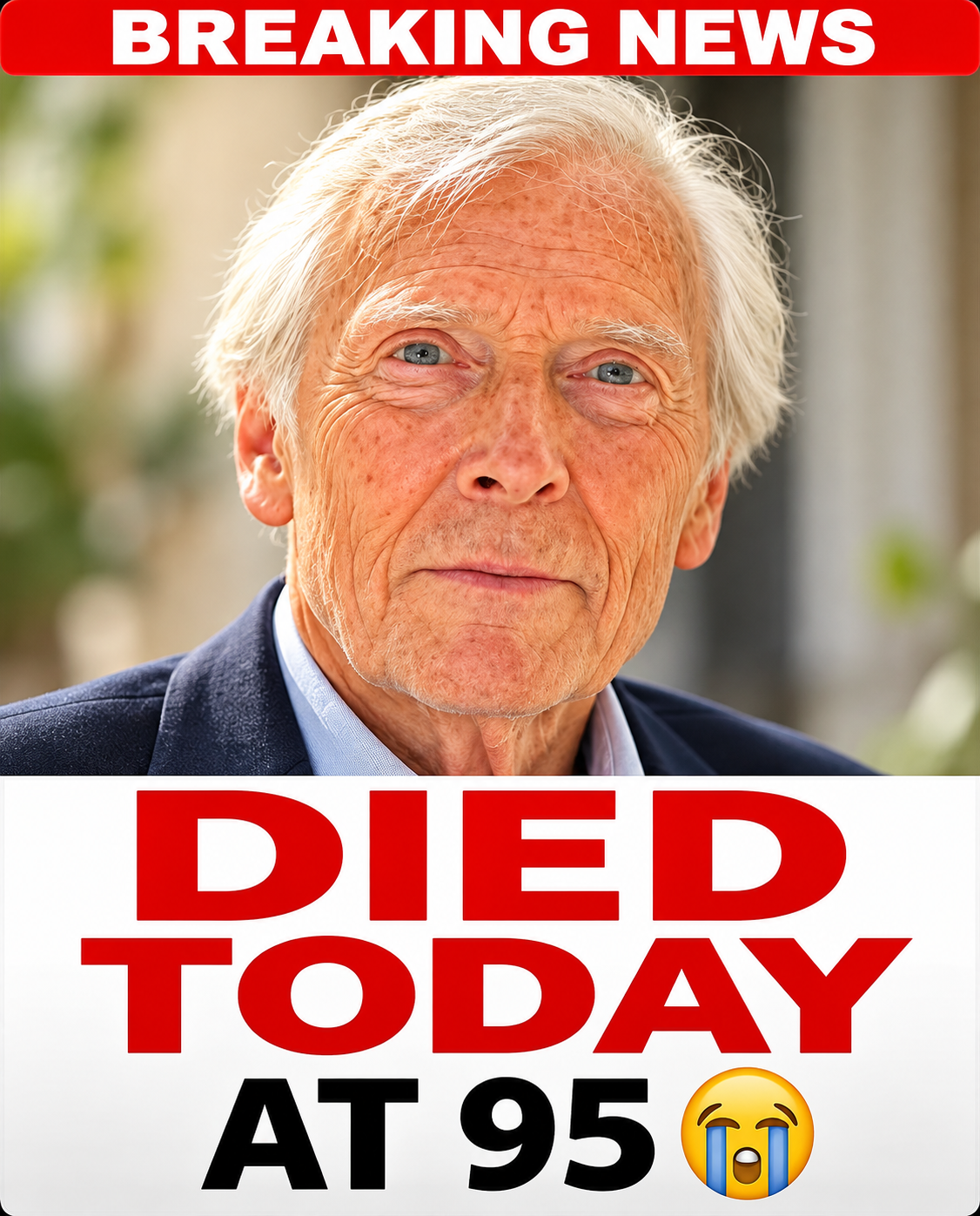
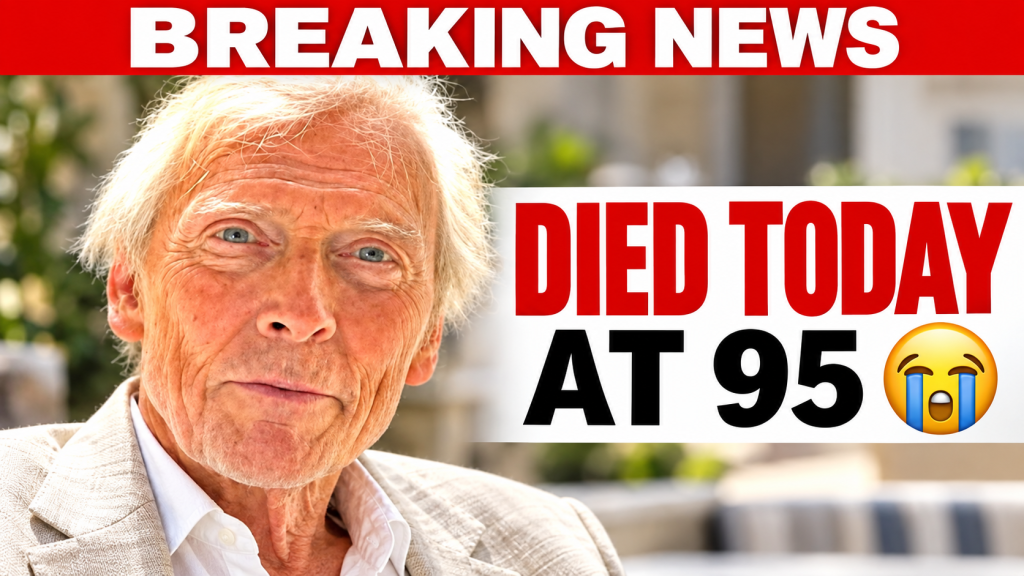
In 2026, social-media users again encountered posts and searches suggesting that Clint Eastwood had died. Some pages presented tribute-style graphics, black-and-white photographs, memorial language, or headlines phrased as though the news had already been confirmed.
But reporting examining those claims described them as false rumors rather than verified reports of his death. Articles published during 2026 documented how searches asking whether Eastwood had died surged as misleading posts circulated online.
And this was not the first time.
Years earlier, fact-checkers had already documented a Clint Eastwood death hoax. In 2019, Lead Stories investigated a YouTube video falsely claiming that Eastwood had died. The video used memorial-style imagery and even displayed the letters “CNN,” making the presentation look more authoritative than it really was.
The tactic is simple.
Make something look familiar.
Make it emotional.
Make it urgent.
Then let people do the distribution.
Imagine scrolling through Facebook late at night.
You see Clint Eastwood’s face.
The photograph is black and white.
Perhaps there is a candle in the corner.
Maybe the caption says something like:
“Hollywood says goodbye to a legend.”
There is no link to an official family statement.
No major news organization is identified clearly.
No date is explained properly.
But hundreds of comments are already beneath it.
“Rest in peace.”
“One of the greatest.”
“I grew up watching him.”
“Another legend gone.”
That comment section itself begins functioning like evidence.
If hundreds of people are already mourning, the next person assumes somebody must have confirmed the news.
So they share it.
Then someone in another group sees the shared post.
They share it again.
Within an hour, the rumor has traveled farther than the original page ever could have managed alone.
This is one of the most effective engines of misinformation:
People trust other people’s reactions.
Not necessarily the original claim.
A friend sharing something feels more credible than an unfamiliar website.
A relative posting a tribute feels more personal than a random headline.
And once grief enters the conversation, people become less likely to stop and investigate.
The emotional logic becomes:
Why would someone post this if it were not true?
Unfortunately, the internet provides a simple answer.
Attention.
Celebrity death rumors generate enormous attention.
People click.
People comment.
People search.
People argue.
People send screenshots.
People open links.
Some pages benefit from advertising traffic.
Others are trying to build followers.
Still others may be testing engagement with fabricated content.
And sometimes the misinformation becomes even more commercially aggressive.
Eastwood’s name has also appeared in false health-related advertising and fabricated stories suggesting he had been diagnosed with dementia or Alzheimer’s disease and then dramatically “recovered” using some supposed treatment or supplement.
Fact-checking published in 2026 found no credible evidence that Eastwood had publicly announced such a diagnosis, and reports examined misleading marketing that falsely connected his name to supposed dementia cures.
That is an important distinction.
Saying there is no verified public diagnosis does not mean outsiders know every detail of a celebrity’s private medical condition.
They do not.
It means responsible reporting should not transform an unsupported internet claim into a medical fact.
The same principle applies to death rumors.
A tribute image is not confirmation.
A viral Facebook post is not confirmation.
A YouTube thumbnail saying “RIP” is not confirmation.
A large number of comments is not confirmation.
Even trending searches are not confirmation.
In fact, searches often trend precisely because people are confused.
A phrase like “Did Clint Eastwood die?” can become popular not because he died, but because thousands of people are simultaneously trying to determine whether a rumor is true.
That creates another misleading feedback loop.
Someone sees the phrase trending.
They conclude:
Something must have happened.
Then they search.
The search volume increases.
Now even more people notice the trend.
Before long, confusion itself becomes the story.
Eastwood is particularly vulnerable to this kind of rumor for several reasons.
The most obvious is age.
He was born May 31, 1930, and his career reaches back to 1950s film and television. His breakthrough years included Rawhide and the Sergio Leone Westerns before Dirty Harry further established him as a major star.
When a public figure reaches their nineties, audiences know intellectually that health and mortality become more relevant.
That makes false reports feel plausible.
The rumor does not need to convince someone of something impossible.
It only needs to exploit something they already know could eventually happen.
This is why misinformation involving elderly celebrities often succeeds.
The reader thinks:
He is very old.
I haven’t seen him recently.
Maybe this is true.
Those three thoughts can replace verification.
Eastwood’s relatively limited public visibility compared with younger social-media celebrities may also create room for speculation.
Someone in their twenties might post daily videos proving they are active.
A filmmaker in his nineties is unlikely to maintain that kind of constant digital presence.
So when weeks or months pass without a widely circulated appearance, rumor pages can turn ordinary privacy into dramatic speculation.
“Fans worried.”
“Sources concerned.”
“Legend disappears from public eye.”
“Heartbreaking update.”
Those phrases often reveal almost nothing.
But they create emotional suspense.
And suspense drives clicks.
The reality of Eastwood’s later career has already been remarkable without fictional additions.
In 2024, at age 94, he directed Juror No. 2, a courtroom drama starring Nicholas Hoult and Toni Collette. Variety reviewed it as another entry in Eastwood’s long-running interest in moral responsibility and justice.
A person can be elderly, private, and less visible while still having an active professional legacy.
Those facts do not need to be converted into either extreme:
“He is perfectly healthy because he worked recently.”
or
“He has disappeared, so something terrible must have happened.”
Both go beyond the available evidence.
This is where responsible readers have an advantage.
Instead of asking:
Does this post look convincing?
Ask:
Who is actually reporting this?
That one question eliminates a remarkable amount of misinformation.
If a major entertainment figure dies, reliable information normally appears quickly across multiple established news organizations.
There may be a family statement.
A representative may confirm it.
An agent may speak.
A studio or longtime collaborator may release a message.
Reputable newspapers and broadcasters will cite who confirmed the death.
If none of that exists and the story lives mainly on anonymous social pages, recycled videos, or strange websites, caution is necessary.
Another warning sign is language designed to make you react before reading.
“Fans are devastated.”
“Tragic news confirmed.”
“You won’t believe what happened.”
“Hollywood is mourning.”
“Say goodbye to a legend.”
Sometimes those phrases accompany real reporting.
But when the source is vague, they can be emotional bait.
The image matters too.
Celebrity rumor pages frequently use photographs that look like memorial cards.
Black background.
White text.
Birth year followed by a dash and another year.
Candle graphics.
Hospital imagery.
Family photographs taken from unrelated events.
These design choices create authority through appearance.
People often process the image before they examine the source.
That is why a fabricated memorial graphic can travel faster than a factual article correcting it.
The false version takes one second to understand.
The correction requires context.
A fake post says:
“Clint Eastwood has died.”
A responsible correction must say:
“No reliable source has confirmed this; the circulating post appears to be another death hoax; here is what verified reporting actually shows.”
Misinformation is short.
Truth often needs explanation.
That imbalance favors the rumor.
There is another psychological reason these stories spread.
People want to participate in important moments.
When someone famous dies, millions of people remember where they first saw their work.
They tell stories.
They post favorite scenes.
They share photos.
They feel part of a collective goodbye.
A false death report hijacks that instinct.
People begin mourning before they know whether mourning is appropriate.
By the time the correction appears, some have already shared the original claim with thousands of others.
And corrections rarely spread as widely.
Someone may delete the false post.
But the screenshot survives.
Another account reposts it without noticing the correction.
Months later, the same image can reappear.
Suddenly an old rumor looks new again.
This recycling explains why celebrity death hoaxes can return repeatedly around the same person.
The underlying content does not need to be newly invented each time.
It only needs a new caption.
That appears to have happened repeatedly around Clint Eastwood over the years, with both death rumors and unsupported health claims resurfacing in different formats.
Artificial intelligence adds another complication.
Images can now be generated or altered easily.
Voices can be imitated.
Fake screenshots can be created.
Videos can be assembled from real footage and false narration.
Even unrelated archival photographs can be presented as though they were taken yesterday.
Lead Stories recently fact-checked an AI-generated image involving Eastwood and other celebrities that falsely purported to show them together at a historical event, illustrating how synthetic imagery can complicate verification even beyond death rumors.
That does not mean every unusual image is fake.
It means visual evidence should no longer automatically be treated as proof.
The safest response to dramatic celebrity news is surprisingly simple.
Wait.
Not for days.
Sometimes only a few minutes.
Search the person’s name.
Look for multiple credible outlets.
Check publication dates.
Open the article rather than relying on the headline.
See who confirmed the information.
If every result leads back to the same obscure source, that is not independent confirmation.
If a post claims “family confirms” but never names the family member or links to a statement, be cautious.
If a video says a famous actor died but major outlets remain silent hours later, that silence itself should make you skeptical.
And if the story involves a serious medical diagnosis, the standard should be even higher.
Private health information belongs to the individual.
Unless the person, family, representative, or another credible source has publicly confirmed a diagnosis, social-media speculation should not be repeated as fact.
Clint Eastwood’s real legacy does not require invented tragedy.
His career is extraordinary enough.
From television Westerns to Sergio Leone’s films, from Dirty Harry to directing Oscar-winning work such as Unforgiven and Million Dollar Baby, he has remained a major figure in American cinema across generations.
That long history is exactly what makes audiences vulnerable when they see his face attached to alarming headlines.
People care.
And caring makes them react.
The lesson is not to stop caring.
It is to separate emotion from verification.
When a beloved public figure becomes the subject of breaking news, pause before turning a rumor into another person’s certainty.
Check.
Confirm.
Then share.
Because the person who reposts misinformation rarely thinks:
I am spreading false information.
They usually think:
I am helping people know what happened.
That is what makes misinformation so effective.
It recruits good intentions.
One person sees a tribute.
They feel sadness.
They share it with friends.
Those friends trust them.
Within minutes, thousands of people are reacting to an event that may never have happened.
By the time fact-checkers catch up, the emotional story has already traveled around the world.
That is how a rumor about someone as famous as Clint Eastwood can spread so fast.
Not because everyone is careless.
Not because everyone wants to believe something false.
But because familiar faces create strong emotions, algorithms reward engagement, sensational claims move quickly, and verification requires one thing social media rarely encourages:
Patience.
In the age of instant information, that may be the most important habit of all.
Before posting “Rest in peace,” make sure the person is actually gone.
Before repeating a health claim, make sure someone credible has confirmed it.
Before sharing the headline everyone is talking about, ask where it came from.
Because speed can make a rumor viral.
Only verification can make it true.
THE END! THANKS FOR READING!