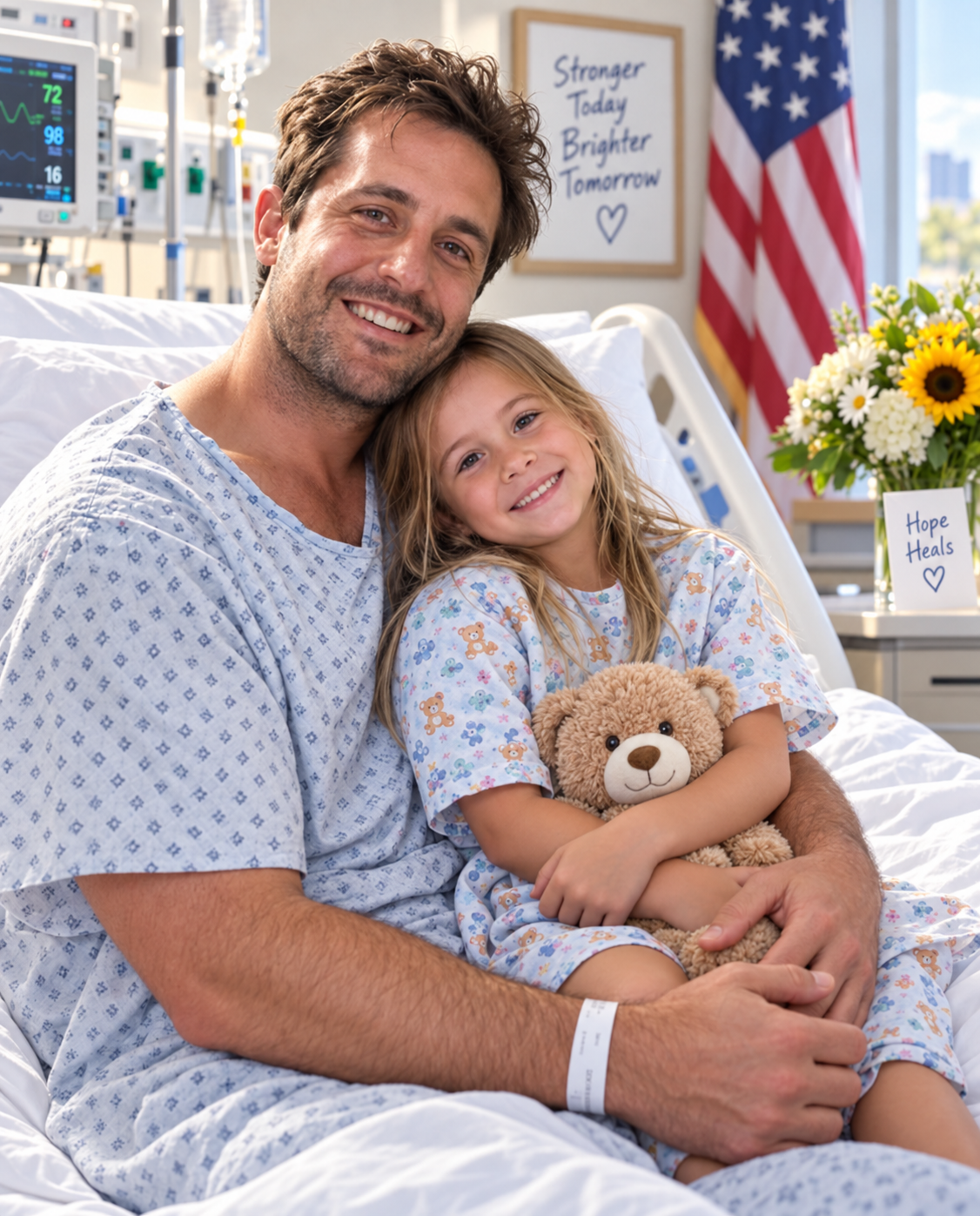
PART 1 My only son donated a kidney to a five-year-old girl. Four days later, he was dead. The morning after I buried him, the little girl’s mother appeared at my front door and whispered: “Ethan never told you the real reason he saved Rosie, did he?”
For several seconds, I couldn’t speak.
Lauren stood on my porch wearing a dark gray coat. Her eyes were swollen from crying.
Beside her was Rosie.
Tiny.
Pale.
Freshly discharged from the hospital.
She held a stuffed rabbit against her chest.
I had seen photographs of her before.
Ethan showed me plenty.
But this was the first time I had actually looked into her eyes.
Something about them made my breath catch.
Lauren reached inside her coat and pulled out a folded piece of paper.
“I should have told you before the surgery.”
My fingers tightened around the doorframe.
“Told me what?”
She handed me the paper.
It was a laboratory report.
At first, the words meant nothing.
Then I saw Ethan’s name.
Ethan Cole.
Rosie Bennett.
PATERNITY PROBABILITY: GREATER THAN 99.99%.
My knees nearly gave out.
I grabbed the wall.
“No.”
Lauren started crying.
“Rosie is Ethan’s daughter.”
The world went silent.
I looked at Rosie again.
Her dark brown eyes.
The tiny dimple near the left side of her mouth.
The way she held her rabbit by one ear.
Ethan had done that with his stuffed bear when he was little.
I stared at Lauren.
“My son had a daughter?”
“Yes.”
“For five years?”
“Yes.”
“And I didn’t know?”
Lauren lowered her head.
“No.”
Anger hit me so quickly that I almost shut the door.
But Rosie looked up.
“Are you Ethan’s mommy?”
My heart broke.
I crouched slowly.
“Yes.”
She considered that.
Then whispered:
“He told me you make the best pancakes.”
I covered my mouth.
Ethan had talked about me.
To her.
I stood and stepped aside.
“Come in.”
Lauren hesitated.
“You don’t have to—”
“Come inside.”
They entered.
My house still looked exactly as it had before the funeral.
Flowers everywhere.
Casseroles in the refrigerator.
Sympathy cards stacked on the dining table.
And Ethan’s photograph above the fireplace.
Rosie saw it immediately.
She walked toward it.
“That’s Ethan.”
I stared at her.
Not Dad.
Ethan.
Lauren noticed.
“She didn’t know until recently.”
I turned.
“Sit down.”
Rosie curled into the corner of the sofa.
I sat across from Lauren.
“Start at the beginning.”
Lauren wiped her face.
“Ethan and I dated briefly after college.”
I remembered that.
Barely.
Lauren had been one of the quiet girls from Ethan’s high school class.
They reconnected when he was twenty-four.
He mentioned her a few times.
Then nothing.
“We weren’t together very long,” she continued. “Maybe four months.”
“What happened?”
“We wanted different things.”
“Did he know you were pregnant?”
“No.”
I stared.
“I found out after we broke up.”
“Why didn’t you tell him?”
Her face tightened.
“Because I was angry.”
That answer landed badly.
“You kept his daughter from him because you were angry?”
“No.”
She shook her head.
“At first, I told myself I would wait until I calmed down. Then my father got sick. My mother was helping me. Everything became complicated.”
“That doesn’t explain five years.”
“I know.”
Her voice cracked.
“I made a terrible decision.”
Rosie looked over.
Lauren lowered her voice.
“I convinced myself Ethan didn’t want children.”
“That’s ridiculous.”
“I know that now.”
“He loved kids.”
“I know.”
“Then why?”
Lauren stared at her hands.
“Because when we broke up, he told me he wasn’t ready to build a family.”
I remembered Ethan at twenty-four.
Still grieving his older brother.
Working sixty hours a week.
Avoiding anything that looked permanent.
“He probably meant then.”
“I know.”
“You decided it meant forever.”
“Yes.”
I wanted to hate her.
Part of me did.
Then Rosie coughed softly from the couch.
The anger became more complicated.
“When did Ethan find out?”
“Seven months ago.”
My head snapped up.
“Seven months?”
Lauren nodded.
“When Rosie’s kidneys started getting worse, doctors recommended testing relatives.”
“What happened to her kidneys?”
“A congenital disorder. She was born with abnormalities that progressed.”
“Her grandparents?”
“Not matches.”
“Other relatives?”
“No one suitable.”
She looked toward Rosie.
“I was terrified.”
“So you called Ethan.”
“Yes.”
“What did you say?”
“I told him he had a daughter.”
I closed my eyes.
I tried to imagine receiving that phone call.
Your five-year-old daughter exists.
She is critically ill.
She may need your kidney.
“What did he do?”
Lauren gave a broken laugh.
“He thought I was lying.”
That sounded like Ethan.
“He demanded a DNA test.”
“Of course.”
“It came back positive.”
I looked again at the report.
“And then?”
“He sat in his car outside the clinic for almost two hours.”
“Did he yell?”
“No.”
“Did he blame you?”
“At first.”
She wiped her eyes.
“He said, ‘You stole five years from me.’”
My chest tightened.
“Then he asked where Rosie was.”
I could see him doing exactly that.
“What happened when he met her?”
Lauren smiled through tears.
“She was coloring.”
“What?”
“In the pediatric nephrology unit.”
“She had crayons all over the floor.”
Lauren laughed softly.
“He stood in the doorway and couldn’t move.”
“And Rosie?”
“She looked at him and said, ‘Are you the man Mommy said I look like?’”
I started crying.
Lauren continued:
“Ethan sat on the floor beside her.”
“He stayed three hours.”
“He didn’t tell her he was her father that day.”
“Why?”
“He wanted to earn his way into her life.”
That was my son.
“He came back the next morning.”
“And the next.”
“He learned her doctors’ names, her medication schedule, which cereal she liked.”
“And then he asked to be tested.”
Lauren nodded.
“He was compatible.”
I stared at her.
“Why didn’t he tell me?”
“He wanted to.”
“Then why didn’t he?”
Lauren looked toward Ethan’s photograph.
“Because of Marcus.”
My older son.
The name hit like a stone.
Marcus died eight years earlier after complications from emergency surgery.
Ethan had been beside him.
Afterward, Ethan could barely enter a hospital without becoming anxious.
Needles terrified him.
Operating rooms terrified him.
Death terrified all of us.
“He thought I would stop him,” I whispered.
“Yes.”
I shook my head.
“I would have tried.”
“I know.”
“He knew that.”
“Yes.”
I remembered the night Ethan told me about the kidney.
He walked into my kitchen and said:
“Mom, I’m giving away one of my kidneys.”
I asked why.
He showed me Rosie’s picture.
He called her the daughter of an old classmate.
Not his daughter.
I had asked:
“Why you?”
He answered:
“Because I match.”
I should have known there was more.
“He lied to me.”
Lauren’s eyes filled.
“He was afraid you’d lose another son in a hospital.”
“And I did.”
Neither of us spoke.
That truth was too cruel.
I looked toward Rosie.
She was staring at Ethan’s picture.
“Does she know?”
Lauren nodded.
“I told her two weeks before surgery.”
“Why then?”
“Ethan asked me to.”
I turned.
“He did?”
“He said if something happened, he never wanted her growing up believing the person who donated was just a stranger.”
My stomach twisted.
“He knew he could die?”
Lauren shook her head quickly.
“No. The doctors explained that living donation is generally considered safe, but every surgery has risks.”
“He wasn’t expecting this.”
“No.”
“Then why say that?”
“Because Ethan thought about everything.”
That was true.
Sometimes too much.
Rosie climbed down from the couch.
She walked toward me.
Then held out her stuffed rabbit.
“His name is Captain.”
I took it carefully.
“Ethan gave him to you?”
She nodded.
“Before his surgery.”
She pointed to the rabbit’s blue ribbon.
“He said Captain had to watch me while he was sleeping.”
I started crying again.
Rosie climbed into the chair beside me.
Then she whispered:
“Is Ethan sleeping forever?”
Lauren turned away.
I looked at this child.
My granddaughter.
The daughter my son had known for only seven months.
The child carrying his kidney.
The last living part of him I never knew existed.
“Yes, sweetheart.”
Her bottom lip trembled.
“Because he gave me his kidney?”
“No.”
I answered immediately.
“No, Rosie.”
She stared at me.
“He got very sick after surgery.”
“Was it my fault?”
My heart shattered.
I pulled her gently into my arms.
“No.”
I heard Ethan’s final words.
Please don’t blame Rosie or her mother.
Now I understood why.
He wasn’t only asking me not to blame a sick little girl.
He was asking me not to punish his daughter for the secrets adults had kept.
I held her tighter.
“It was never your fault.”
PART 2
Later that afternoon, Lauren gave me a second envelope.
“He asked me to give you this if anything happened.”
I froze.
“You had this before the surgery?”
“He gave it to me the night before.”
My hands shook as I opened it.
Inside was a letter.
Mom,
If you’re reading this, something happened that none of us wanted.
Before you get angry at Lauren, please read everything.
Rosie is my daughter.
I found out seven months ago.
I was furious that I missed five years, but anger doesn’t return time.
I decided I wasn’t going to spend whatever time I did have with her fighting about the time I didn’t.
My vision blurred.
I continued.
You’re going to ask why I didn’t tell you.
Because I knew you would be afraid.
After Marcus, hospitals became a place where our family learned that loving someone doesn’t always mean you can keep them.
I couldn’t ask you to sit through another surgery knowing it was your son on the table.
Maybe that was wrong.
It probably was.
I’m sorry.
I covered my mouth.
The letter continued.
I didn’t donate because I was trying to be a hero.
I donated because the first time Rosie called me Dad, I realized something.
I had already lost five years with her.
I wasn’t willing to lose the rest because I was afraid of needles.
If everything goes well, I’m going to bring her to Sunday dinner and tell you myself.
You’re going to spoil her horribly.
I already know.
If things don’t go well, please don’t turn my choice into her guilt.
She is five.
She owes me nothing.
But if you can love her, please do.
Not because of the kidney.
Because she’s mine.
And because that makes her yours too.
Love,
Ethan.
I pressed the letter against my chest.
For the first time since he died, I screamed.
Not at Lauren.
Not at Rosie.
At life.
At the absurd unfairness of it.
I had already buried Marcus.
Now Ethan.
Both my sons.
And all the while, sitting less than ten feet away, was a granddaughter I never knew I had.
Lauren started crying too.
“I’m sorry.”
I looked at her.
“You should have told him.”
“I know.”
“You should have told me.”
“I know.”
“You took five years.”
“I know.”
I wanted her to defend herself.
It would have been easier to stay angry if she did.
Instead, she said:
“There is nothing I can say that makes that right.”
I looked at Rosie.
Then back at Lauren.
“What happens now?”
Lauren blinked.
“What do you mean?”
“Are you going to disappear?”
“No.”
“You did once.”
She flinched.
“I know.”
“I will not lose her too.”
Lauren began crying harder.
“You won’t.”
That became our beginning.
Not forgiveness.
Not friendship.
A beginning.
Rosie recovered slowly.
The transplant worked beautifully.
Her bloodwork improved.
Her energy returned.
Within two months, she was running through my backyard.
The first time she did it, I had to turn away because Ethan should have been there.
He should have seen her.
He should have heard her laugh.
Lauren stood beside me.
“He talked about bringing her here.”
I nodded.
“He wrote that.”
“He was excited.”
“I know.”
“He wanted to tell you after the transplant.”
I laughed sadly.
“He thought I would spoil her.”
Lauren smiled.
“Will you?”
“Absolutely.”
That was the first time we laughed together.
I put Ethan’s letter in a frame.
Not the whole thing.
Just one sentence.
She owes me nothing.
That became important.
Because everyone called Ethan a hero.
Local newspapers wrote about him.
His employer created a memorial fund.
The transplant center asked whether I would speak at an organ-donation event.
At first, I refused.
Then I realized Ethan would have hated one thing more than anything else:
People making Rosie feel like she owed him her entire life.
So when I eventually spoke, I said:
“My son made a choice freely. The child he helped does not carry a debt. She carries a future.”
I never identified Rosie publicly.
That story belonged to her.
Lauren and I decided together.
Months later, we met with the transplant team.
I needed to understand exactly what happened to Ethan.
The surgeon was gentle.
“The procedure itself went as expected.”
“Then why did he die?”
“He developed a rare postoperative complication.”
“Could anyone have prevented it?”
“We reviewed the case extensively.”
He explained everything as carefully as possible.
There was no simple villain.
No obvious error.
No moment where someone could point and say:
There.
That caused it.
Sometimes medicine saves one life and still cannot protect another.
I hated that answer.
But eventually, I accepted it.
The hospital was not responsible for my grief.
Rosie certainly wasn’t.
Lauren became more difficult.
Not because she was cruel.
Because forgiveness is harder when someone genuinely regrets hurting you.
For the first year, I kept our relationship polite.
She brought Rosie every Sunday.
I cooked.
We talked about school.
Medicine.
Weather.
Anything except those missing five years.
Then one evening, after Rosie fell asleep upstairs, I finally asked:
“Did Ethan forgive you?”
Lauren stared at her tea.
“He was trying.”
“What does that mean?”
“He said forgiveness wasn’t pretending it didn’t matter.”
That sounded exactly like him.
“He was angry.”
“Yes.”
“Very?”
“Yes.”
“Good.”
Lauren almost smiled.
“He yelled at me once.”
“Also good.”
“He said every birthday picture felt like evidence from a life he should have been in.”
My eyes filled.
“Then why stay?”
“Rosie.”
Of course.
“He told me he didn’t want his first act as her father to be starting a war with her mother.”
I shook my head.
“He was better than both of us.”
Lauren smiled sadly.
“Yes.”
Two years after Ethan died, Rosie asked me:
“Was Daddy brave?”
We were making pancakes.
Badly.
Just like Ethan predicted.
“Yes.”
“Because he gave me his kidney?”
“Partly.”
“What else?”
I thought.
“Because he was scared and did what he thought was right anyway.”
She nodded seriously.
“I’m scared of bees.”
“That counts.”
“If I save someone from a bee, am I brave?”
“Extremely.”
She smiled.
Then asked:
“Did Daddy love me?”
I stopped flipping the pancake.
“Yes.”
“How much?”
I looked at her.
“More than he had time to show you.”
She seemed satisfied.
By the time Rosie was eight, she had Ethan’s exact laugh.
That bothered me at first.
Then it comforted me.
She joined soccer.
She hated piano.
She loved astronomy.
She insisted on sleeping with Captain the rabbit even though he was falling apart.
I repaired him three times.
When she turned ten, Lauren brought over a box.
“What is this?”
“Ethan’s things.”
I stared at her.
“I kept some.”
Inside were photographs from the seven months they had known each other.
Ethan and Rosie making pancakes.
Ethan reading beside her hospital bed.
Ethan pushing her in a wheelchair through the hospital garden.
One photograph destroyed me.
Rosie asleep against Ethan’s chest.
His eyes closed.
His hand resting gently on her back.
On the back, he had written:
Five years late. Never again.
I sat on the floor and cried.
Rosie sat beside me.
She was old enough by then to understand more.
“Grandma?”
“Yes?”
“Do you wish Daddy didn’t give me his kidney?”
The question I had feared for five years had finally come.
I took her hands.
“I wish your daddy was alive.”
Her eyes filled.
“So yes?”
“No.”
I shook my head.
“I wish the world had given me a choice where both of you lived.”
She stared at me.
“But it didn’t.”
“No.”
“What would you pick?”
“I’m glad nobody made me choose.”
That was the truth.
If someone had asked me before surgery:
Your son or your granddaughter?
I could not have answered.
Ethan answered for himself.
I had to respect that.
Even when it hurt.
Lauren eventually became family.
Not because I forgot what she did.
I never did.
She apologized more than once.
I finally told her:
“You don’t have to apologize every time you walk into my house.”
She looked surprised.
“Does that mean you forgive me?”
I thought carefully.
“It means I don’t want Rosie growing up between two women rehearsing the same mistake.”
Lauren cried.
So did I.
That was as close to forgiveness as I could get.
When Rosie turned fifteen, she asked for every letter and photograph we had.
She wanted the full story.
We told her.
Lauren did not excuse herself.
Neither did I hide my anger.
Rosie listened.
Then said:
“So everybody made mistakes except me?”
I laughed.
“Basically.”
She nodded.
“Good.”
Then she looked at Lauren.
“You should have told Dad.”
“I know.”
Then at me.
“He should have told Grandma.”
I almost laughed again.
“Yes.”
Then Rosie looked at Ethan’s photograph.
“But he still came.”
That sentence stayed with me.
He still came.
Five years late.
Afraid.
Angry.
Confused.
He still showed up.
He learned her doctors.
He sat beside her.
He let her call him Dad.
And when he discovered his kidney could save her life, he chose to give it.
My son died four days later.
Nothing makes that fair.
Nothing makes that beautiful.
I would never romanticize losing him.
I wanted Ethan alive.
I wanted him married someday.
Older.
Gray-haired.
Complaining about his knees.
I wanted arguments and Christmas mornings and phone calls.
I wanted another forty years.
But life did not ask me what I wanted.
It left me with a letter.
A granddaughter.
And the final request my son gave me:
Please don’t blame Rosie or her mother.
I honored that request.
Not perfectly.
But I tried.
Ethan believed he was giving Rosie a kidney.
What he actually gave our family was something larger.
A second chance to find each other.
I lost my son.
But I discovered his daughter.
And every time Rosie walks through my front door, drops her backpack on the floor, and calls:
“Grandma, I’m starving!”
I hear a little piece of Ethan coming home.
THE END! THANKS FOR READING!